
The check-engine light is the most misunderstood symbol on your dashboard. Drivers either panic and pull over on the interstate, or shrug it off for six months until the car finally strands them in a parking lot. Both reactions are wrong — and both are expensive.
What the light actually means
Your engine is monitored by dozens of sensors feeding into the Engine Control Module (ECM). When one of those sensors reports a reading outside a defined range, the ECM logs a Diagnostic Trouble Code (DTC) and turns on the check-engine light. The light itself doesn't tell you what's wrong — it tells you the computer wants you tolook.
There are two states worth knowing:
- Solid light:An emissions or performance issue has been detected. Safe to drive to the shop, but don't ignore it for weeks.
- Flashing light:Active misfire happening right now. Raw fuel is dumping into your exhaust and destroying your catalytic converter every mile you drive. Pull over and call a tow.
The "just read the code" trap
Auto parts stores will scan your car for free and hand you a code likeP0420. That code reads "Catalyst System Efficiency Below Threshold." The counter clerk will sell you a $900 catalytic converter. Half the time, the real problem is a $35 oxygen sensor, a vacuum leak, or even bad fuel — and the cat is fine.
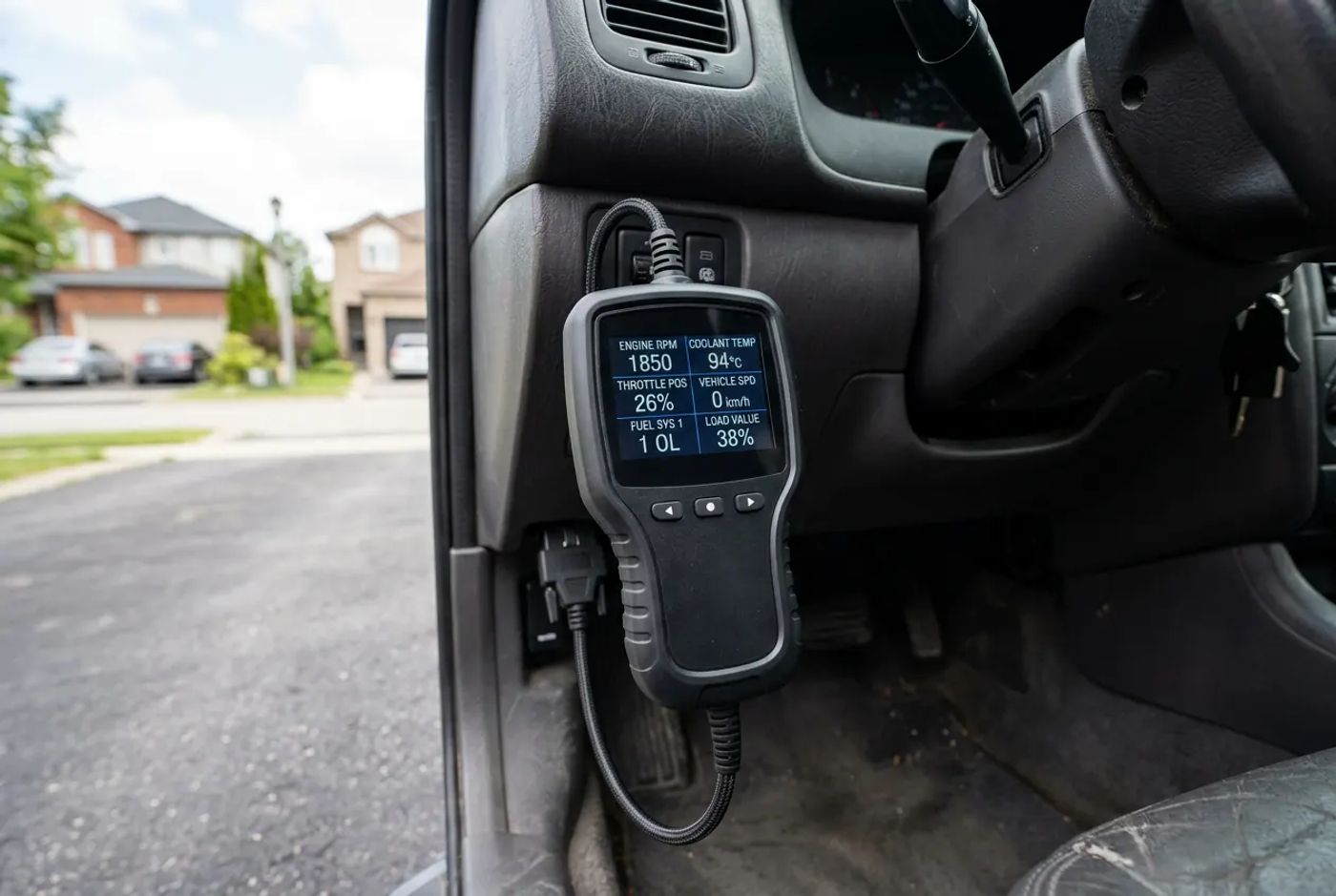
A DTC is a starting point, not a diagnosis. Our techs use the code to pull live sensor data, fuel trims, freeze-frame snapshots from the exact moment the fault tripped, and oxygen sensor waveforms on a scope. That's the difference between guessing and knowing.
The most common codes we see in Decatur
- P0171 / P0174 — System Too Lean:Usually a vacuum leak, dirty MAF sensor, or a weak fuel pump. Easy to misdiagnose as injectors.
- P0300 — Random Misfire:Could be coils, plugs, injectors, low compression, or even a cracked intake. Needs real testing.
- P0420 — Catalyst Efficiency:Often upstream O2 sensors, exhaust leaks, or engine running rich — not always the cat.
- P0455 — EVAP Large Leak:80% of the time, this is your gas cap. Tighten it and drive a few cycles before spending money.
What it costs you to wait
A misfire ignored for a month doesn't just stay a misfire. It dumps unburned fuel into the catalytic converter at 1,200°F until the substrate melts. That's a $40 ignition coil turning into a $1,400 cat-and-coil job. We see this every single week.
What to do when the light comes on
- Don't panic. Note whether the light is solid or flashing.
- Check your gas cap. Tighten until it clicks three times.
- Listen and feel — rough idle, hesitation, loss of power, weird smells.
- If anything feels off, or the light is flashing, call us before you keep driving.
- If it's solid and the car drives normally, book a diagnostic within the week.
Our diagnostic process
When you bring the car in, we pull all stored and pending codes, capture freeze-frame data, run live fuel-trim and O2 sensor tests, and verify with a scope when needed. You get a written explanation of what the code means, what the real cause is, and a fixed quote before any wrench touches the car. No upsells, no scare tactics.
Bottom line:the check-engine light is your engine asking for help. The cheapest fix is always the one you do before the small problem becomes a big one.
Talk to a real tech about your vehicle.
Honest diagnostics, fixed quotes, no upsells. Decatur, GA.